Culture
Artists “Deconstruct Unity” in thought-provoking exhibition at national museum Lagos
Published
1 year agoon
By
akonitv
A new exhibition at the National Museum in Lagos, titled ‘Deconstructing Unity,’ features four artists examining the complexities of communal identity and cultural cohesion in Nigerian daily life through their works
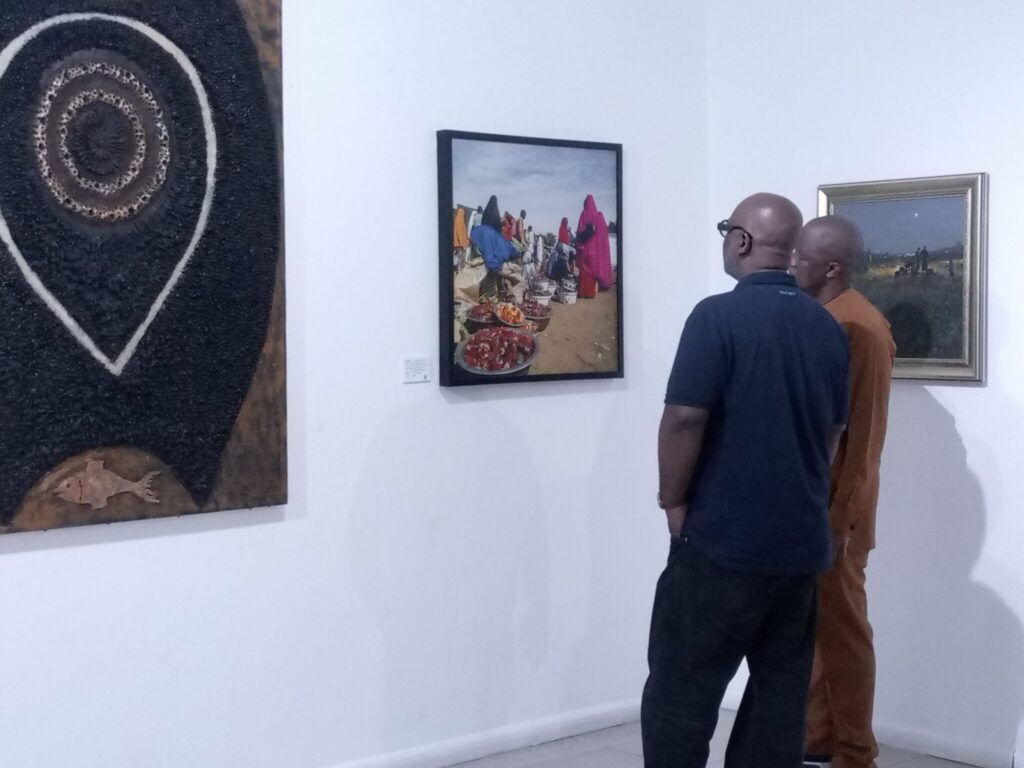
A compelling art exhibition titled ‘Deconstructing Unity’ has opened at the Happ Circle Gallery within the National Museum, Onikan, Lagos, offering a fresh and insightful perspective on unity, communal identity, and cultural cohesion in Nigeria.
Also read: Minister of Art, Culture, Tourism, Creative Economy pays homage to new Alaafin of Oyo, affirms FG’s support for traditional institutions
The exhibition, which runs until April 30th, showcases the diverse works of four talented Nigerian artists: Moses Oghagbon, Klaranze Okhide, Kunle Ogunfuyi, and Abdulrazaq Ahmed.
Each artist presents ten artworks, totaling 40 pieces that delve into various aspects of Nigerian life, including the vibrant Argungu Fishing Festival and the subtle bonds that unite communities through shared faith and purpose.
Curated by Moses Ohiomokhare, the exhibition took approximately six months to come to fruition. Ohiomokhare explained that the concept, initiated by artist Moses Oghagbon, aims to provide a novel interpretation of the Argungu Festival series, which Oghagbon has explored for over two decades.
“Deconstructing Unity may initially appear perplexing,” Ohiomokhare stated, “as the term ‘deconstructing’ pertains to the process of reversing or revealing the unspoken truths that often elude our awareness.
In this context, the artists are adeptly guiding us through the fissures of our quotidian existence, urging us to scrutinise the very framework of our constructed realities.
The goal here isn’t to celebrate unity as a fixed ideal. It’s to examine the fractures, the overlooked routines and symbols that hold or fail to hold us together.”
The goal here isn’t to celebrate unity as a fixed ideal. It’s to examine the fractures, the overlooked routines and symbols that hold or fail to hold us together.” – Moses Ohiomokhare, Curator.
Artist Moses Oghagbon highlighted that the primary aim of the Argungu Fishing Festival is to foster unity by bringing different ethnic groups together.
His acrylic piece, “Man and Time,” captures the preparatory atmosphere the day before the festival, a moment he considers one of the event’s enigmas. He also noted the symbolic significance of collaborating with other artists to amplify the exhibition’s message of unity.
Abdulrazaq Ahmed, a multi-functional artist featured in the exhibition, explained that his works focus on the diverse elements, such as fishing, wrestling, dance, and horse riding, that converge to create the unity inherent in the Argungu Festival.
His artwork, “The Gourd of Life,” a blend of natural fibers and a gourd, explores the intricate beauty of belonging and encourages viewers to reflect on their own connections.
Art collector and Chairman of the event, Billy Osemwegie, lauded the exhibition as a testament to art’s ability to inspire and cultivate unity through culture.
“Art is a universal language that you speak,” Osemwegie remarked. “With art, you don’t care about who made it, the religion of the person or the tribe.”
Related
You may like

Nike Okundaye, Lai Mohammed Honoured at E-VISA 2026 Summit in Lagos

Exeter Bids for 2029 City of Culture to Celebrate Heritage, Innovation, and Sport

Top Nigerian Festivals Backed by FG in 2026

Ogun State to Host Annual Drums Festival, Boosting Culture and Tourism

Benin Art Fair 2025 Showcases Legacy and Innovation

Promising Ogun Cultural Economy Vision Unveiled by Abiodun
Culture
Ofala festival: Obi of Onitsha marks 25 Years on throne
Published
2 days agoon
October 23, 2026
Ofala Festival 2026 celebrated Onitsha’s royal heritage as Obi Nnaemeka Achebe marked 25 years on the throne and addressed Nigeria’s economic challenges.
Related
Culture
Crowds Gather for Rare Sunrise at Egypt’s Abu Simbel Temple
Published
2 days agoon
October 23, 2026
Hundreds of tourists gathered at Egypt’s Abu Simbel temple to witness the twice-yearly sunrise ceremony illuminating Pharaoh Ramses II’s statue
Hundreds of tourists gathered at Egypt’s Abu Simbel temple on Thursday to witness a spectacular sunrise phenomenon in which sunlight illuminated the face of the statue of Pharaoh Ramses II, an event that occurs only twice a year.
Also read: 16 Famous Cultural Festivals That Define India
The ancient astronomical ceremony drew visitors from different parts of the world to the archaeological site in southern Egypt on October 22, one of two dates associated with the phenomenon.
The second occurrence takes place on February 22, when the rising sun illuminates the temple’s interior.
Egyptian tour guide Yasser Fouad described the occasion as extraordinary, saying some visitors had stayed overnight to secure the opportunity to witness the event.
“Today is an extraordinary day, everyone is keen, there are people who stayed over the night, foreigners who actually spent the night in Abu Simbel to see this phenomenon,” Fouad said.
The Great Temple of Ramses II at Abu Simbel dates back to the 13th century BC and is among Egypt’s most prominent archaeological attractions.
Built during the reign of Ramses II, one of ancient Egypt’s most powerful pharaohs, the temple is renowned for its monumental statues and sophisticated architectural design.
The twice-yearly sunrise phenomenon is a major attraction, drawing visitors eager to witness the interaction between sunlight and the temple’s ancient structure.
The dates have traditionally been associated with significant moments in Ramses II’s life.
October 22 is commonly linked to his birthday, while February 22 is associated with his accession to the throne.
However, the precise historical reasons behind the dates remain debated.
Some archaeologists have proposed alternative explanations, including that they may have marked the pharaoh’s coronation and birthday.
Abu Simbel underwent a major international rescue operation in the 1960s, when archaeologists and engineers relocated the temples to protect them from flooding caused by the construction of the Aswan High Dam.
The monumental structures were cut into large blocks and reassembled at a higher location, preserving the site for future generations.
The relocation was one of the most significant archaeological preservation projects of the 20th century.
Despite the move, the temple continues to attract visitors for its ancient Egyptian art, monumental architecture and remarkable alignment with the rising sun.
Also read: 16 Famous Cultural Festivals That Define India
The annual gatherings highlight the enduring appeal of Egypt’s archaeological heritage and the continuing fascination with the astronomical knowledge and engineering achievements of its ancient civilisation.
Related

Ofala festival: Obi of Onitsha marks 25 Years on throne

Crowds Gather for Rare Sunrise at Egypt’s Abu Simbel Temple

16 Famous Cultural Festivals That Define India
Trending
Culture4 years agoThe Four Igbo Market Days and Their Significance In Omenala ÌGBÒ
Business4 years agoOoni of Ife Discusses Business and Peace Initiative in Kenya
Events4 years agoGlamour, glitz as B’obagunwa Omo’ba Obinrin Akile Ijebu celebrates New Year party (Photos)
Culture4 years agoOutrage as Ezendigbo of Ibadanland confers chieftaincy title on Olubadan
Events4 years agoOnitoomu of Ito-Omu installs two new chiefs (Video, Photos)
Events2 years agoEgbe Bobasete: The New Fashion Sensation Elevates 2024 Ojude Oba Festival (Video, Photos)
Events3 years agoNANTAP Convention 2023: Reshaping Nigerian Theatre Arts for economic growth
Paranormal4 years agoBlack Cat Superstition: Good and Bad Luck Beliefs