Connect with us

Opinion

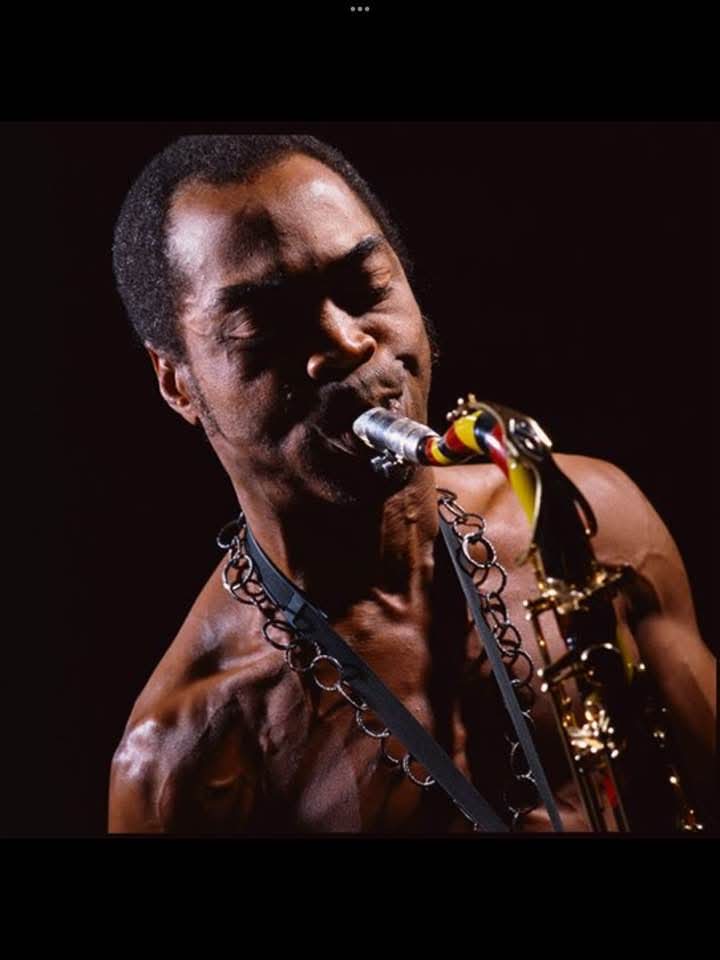
Fela Aníkúlápó Kuti and His Crowned Princes

Published

on

Fela

By Prince Adeyemi Shonibare

Explore why Fela Kuti’s Afrobeat legacy surpasses trends, shaping Nigerian music history, while Wizkid and contemporary stars carry the torch globally

Preface: The Necessity of Historical Context

Every generation seeks its heroes. In music, this instinct often manifests through comparison—an exercise that frequently reveals more about contemporary taste than historical contribution.

Also read: Nigeria Secures Fresh $20bn Investment Pledge From Shell

In recent years, public discourse, amplified by social media, has juxtaposed Fela Aníkúlápó Kuti with global Afrobeats icons, most notably Wizkid, provoking the recurring question of “greatness” in Nigerian music.

This essay does not diminish the accomplishments of Nigeria’s contemporary stars, whose global visibility is unprecedented.

Rather, it offers a scholarly contextualization—one that distinguishes between musical origination and musical succession, and between cultural architecture and commercial dominance—while situating Fela Aníkúlápó Kuti firmly within the category of historical inevitability.

The Problem with Simplistic Comparison

Comparing Fela Aníkúlápó Kuti with contemporary Afrobeats performers is, by scholarly standards, inherently flawed.
Fela’s work transcended performance. He engineered an entire musical and ideological system, fused political philosophy with sound, and permanently altered the trajectory of African popular music.

His output represents cultural authorship, not entertainment calibrated to market demand. Fela’s music is timeless precisely because it was never designed to be fashionable.

A Yoruba proverb captures this distinction with enduring clarity:
“Ọmọ kì í ní aṣọ púpọ̀ bí àgbà, kó ní akísà bí àgbà.”
A child may own many clothes, but he cannot possess the rags of an elder.
The proverb is not dismissive. It is instructive. It speaks to accumulated depth—experience earned, systems built, and legacies forged through time rather than trend.

Musicians and Artistes: A Necessary Distinction

A rigorous analysis requires conceptual precision. Fela Aníkúlápó Kuti was a musician in the classical and intellectual sense: a composer, arranger, bandleader, employer of musicians, multi-instrumentalist, theorist, and cultural philosopher. His work demanded mastery of form, orchestration, ideology, and discipline.

Fela composed extended works, trained orchestras, performed entirely live, and embedded African political consciousness into rhythm, harmony, and structure.

By contrast, many contemporary stars—though exceptionally gifted and globally successful—operate primarily as artistes: interpreters of sound whose work prioritizes studio production, performance aesthetics, and commercial reach. This is not a hierarchy of worth, but a distinction of function.

Fela’s music demanded study and confrontation; contemporary Afrobeats prioritised accessibility, pleasure, and global circulation—often without courting antagonism.
Afrobeat: An Ideological Invention
Afrobeat, as conceived by Fela, was not merely a genre. It was an ideological framework. Jazz, highlife, Yoruba rhythmic systems, call-and-response traditions, and political chant were fused into a resistant, uncompromising form.
Modern Afrobeats—by Wizkid, Burna Boy, and others—are adaptations and descendants, not replicas. They have expanded Africa’s global cultural footprint, but expansion does not erase origination.

Fela’s Afrobeat remains the undiluted prototype upon which contemporary success rests.
Enduring Legacy Beyond Mortality
Fela Aníkúlápó Kuti passed in 1997, yet his influence has intensified rather than diminished. His legacy is evidenced by:
– Continuous academic study across global universities.
– International bands, many formed by people not alive at the time of his death, performing his works.
– FELABRATION, now a global annual cultural event.
– Broadway and international stage adaptations inspired by his life and music.
– Lifetime achievement and posthumous recognition by the Grammy Awards.
– Cultural centres, festivals, and scholarly conferences generating lasting intellectual and economic value.
This constitutes cultural permanence, not nostalgia.
Reconsidering Wealth and Sacrifice
Measured monetarily, Fela was not among the wealthiest musicians of his era. His radicalism came at an immense personal cost. He was beaten repeatedly.

His mother, Funmilayo Ransome-Kuti, was killed. His home was burned. Original artistic archives were destroyed during state-sanctioned violence by unknown soldiers, even though history records who authorised the actions.

Yet Fela gave voice to generations—from Ojuelegba to Mushin, Ajegunle to Jos, Abuja, and even the privileged enclaves of today’s ọmọ baba olówó.

He toured globally with an unusually large band long before satellite television or social media could amplify his reach.
Like Wole Soyinka and Chinua Achebe, Fela’s wealth exists beyond currency. It resides in influence, citation, adaptation, and endurance.

National and Global Recognition

Fela received a state burial in Lagos—an extraordinary acknowledgment from a military government he relentlessly criticised. Nations rarely honour dissenters so formally.

Globally, his stature aligns with figures such as James Brown, Elvis Presley, and the Rolling Stones—artists whose music reshaped identity, politics, and social consciousness.

The Crowned Princes: Wizkid and the Ethics of Reverence

Nigeria’s modern stars—Wizkid, Burna Boy, 2Face Idibia, Davido, Tiwa Savage, Tems, Olamide, among others—have achieved extraordinary global success.

They are wealthier, more mobile, and more visible internationally than previous generations, and they deserve their accolades.
Wizkid, in particular, has consistently demonstrated reverence rather than rivalry toward Fela Aníkúlápó Kuti.
Femi Aníkúlápó Kuti has publicly stated:
“Wizkid loves Fela like a father.”
Wizkid has repeatedly supported FELABRATION, never demanding performance fees.

The only times he has not appeared were occasions when he was not in the country.

He has remixed Fela’s music, bears a Fela tattoo on his arm, and openly acknowledges Fela’s primacy.

A senior associate and long-time friend of Wizkid has affirmed that Wizkid adores Fela, would never equate himself with him—“in this world or the next”—and that recent tensions were reactions to provocation rather than assertions of equivalence.
This distinction matters. Wizkid’s posture is one of inheritance, not competition.
Seun Kuti and the Burden of Legacy
Seun Kuti is a musician of conviction and lineage. Yet relevance is best secured through original contribution rather than reactive comparison.

Fela’s legacy does not require defence through controversy; it is already settled by history.

As William Shakespeare observed:
“The fault, dear Brutus, is not in our stars,
But in ourselves, that we are underlings.”
—Julius Caesar

The weight of inheritance can inspire greatness or provoke restlessness. History rewards those who build upon legacy, not those who contest it.
The Songs That Made Fela Legendary
Among the works that cemented Fela’s immortality are:
– Zombie
– Water No Get Enemy
– Sorrow, Tears and Blood
– Coffin for Head of State
– Expensive Shit
– Shakara
– Gentleman
– Teacher Don’t Teach Me Nonsense
– Roforofo Fight
– Beasts of No Nation
These compositions remain sonic textbooks of resistance.

Fela in the Digital Age

Had Fela lived in the era of social media, his voice would have resonated far beyond Africa.

His music would have found kinship among global movements confronting inequality, oppression, and social injustice.

“Music is the weapon.”
—Fela Aníkúlápó Kuti
Weapons, unlike trends, endure.
Placing Greatness Correctly
Fela Aníkúlápó Kuti’s greatness does not require comparison. He is the great-grandfather of Afrobeat—the musical and cultural architect who cleared the roads upon which today’s Afrobeat princes now travel.

Honouring contemporary success does not diminish historical achievement.

Also read: Nigeria Secures Fresh $20bn Investment Pledge From Shell

To understand Nigerian music’s global relevance is to understand Fela. History, when read correctly, is both generous and precise.

Continue Reading
Click to comment

Leave a Reply

Opinion

Obasanjo declares ‘political war’ on Adeola, vows to test strength in Ogun Central

Published

on

Obasanjo

By Oriyomi Olufemi B

Former Ogun State governorship aspirant and Peoples Democratic Party (PDP) candidate for Ogun Central Senatorial District, Prof. Iyabo Obasanjo, has declared what she called an “all-out political battle” against Senator Solomon Olamilekan Adeola, popularly known as Yayi, accusing the All Progressives Congress (APC) senator of “betrayal, dishonesty and lacking integrity.”

Also read: Wizkid Set to Light Up US Summer Festivals With Headline Performances

Speaking during an interactive session with journalists in Abeokuta on Wednesday, Obasanjo said she had resolved to “show who I am” after alleging that Adeola failed to honour promises made to her following the APC governorship consensus process.

I’m on a war path to show who I am. My name and my family’s name are indelible in the history of Ogun State. For anybody to want to rubbish me, they will find out the hard way that I’m not rubbishable, she said.

Obasanjo alleged that after a reconciliation meeting, Adeola requested one week to respond to issues raised but failed to communicate. I gave him six weeks. After I resigned, he started calling me. I never picked his calls and I never will. Once you’ve broken my trust, you are dead to me, she said.

She claimed her supporters had sought three concessions during the meeting: support for her senatorial ambition in the APC, reimbursement of campaign expenses from the governorship race, and inclusion of members of her political structure in his administration.

Obasanjo said she told Adeola he did not have to grant all the requests but should simply indicate what he could accommodate.

I told him to let me know what he could do so I could explain it to my supporters. Instead, he failed to keep his word. I think he is a man that lacks integrity. He sees people as things to be used, she alleged. She further claimed the senator later attempted to win her over with money, describing the amount offered as insulting.

Obasanjo also asserted that the APC halted her governorship ambition because of the momentum her campaign had generated, adding: If I had continued, there was no way I wouldn’t have beaten Yayi.

The former senator announced the commencement of her senatorial campaign, stating she would begin consultations with PDP structures across the six local government areas of Ogun Central before wider media engagements. Moving forward, I will be doing more media engagement. I am now open to interviews,” she said.

Obasanjo anchored her confidence on her record in public office, citing interventions in mechanic villages and community infrastructure.

Politics is about making people’s lives better. If you cannot make things better for individuals and society, there is no reason to be in politics, she said.

In Ogun Central, I believe I am unbeatable. People know my brand because they have seen what I have done. My focus is on my senatorial district, and we are going to win it, she declared.

Dismissing concerns over the simultaneous conduct of presidential and National Assembly elections, she said, Our people are not stupid. They know who they want to vote for. On fears of election violence, she added: We are citizens, and we will defend our rights. No violence can stop people from voting for who they want.”

She maintained that her nomination met electoral requirements, noting that the Independent National Electoral Commission (INEC) had accepted her as the PDP’s Ogun Central senatorial candidate.

We met the deadline. I was within the time limit, and INEC has accepted me as the PDP candidate, she said. She vowed to beat Yayi to a pulp at the polls.

Prof. Obasanjo, daughter of former President Olusegun Obasanjo, served as Commissioner for Health in Ogun State and later represented Ogun Central in the Senate from 2007 to 2011.

Her name recognition and past performance in office remain assets in the district, particularly in Abeokuta South, Abeokuta North, Odeda, Obafemi-Owode, Ifo, and Ewekoro LGAs that make up Ogun Central.

Senator Adeola, however, is the incumbent senator for Ogun West but has been a central figure in APC politics in Ogun State, with significant grassroots machinery and backing from party structures. He won his current seat in 2023 after switching from Lagos West.

Political observers note that Obasanjo’s threat signals a potentially bruising contest in Ogun Central, where PDP retains pockets of strength despite APC’s dominance at the state level.

Her ability to mobilize her old structure, leverage legacy projects, and frame the race as a referendum on “character and trust” will test Adeola’s reach beyond Ogun West, should he seek to contest in Central.

As of press time, Senator Adeola had not publicly responded to Prof. Obasanjo’s allegations. The APC in Ogun State also has not issued a statement on the claims regarding the governorship consensus or post-consensus agreements.

Also read: Wizkid Set to Light Up US Summer Festivals With Headline Performances

With campaigns set to intensify, Ogun Central is shaping up as a key battleground. Whether Obasanjo’s “war path” translates into electoral upset will depend on PDP cohesion, voter turnout, and the credibility of her claims among undecided voters — with investigations into party negotiations and campaign financing likely to feature in the coming weeks.

Continue Reading

Opinion

Seven prime ministers in a decade: What Nigeria can learn from Britain’s chaos

Published

on

Prime Minister

By Dr Toju Ogbe,

The resignation of British Prime Minister Keir Starmer, less than two years after leading the Labour Party to  a landslide electoral victory, was dramatic, yet reflected a pattern we have become familiar with in recent British politics.

Also read: Abolish state of origin: A prerequisite for true national integration

Starmer now joins a procession of fallen prime ministers stretching back to 2016 – from David Cameron to Theresa May, Boris Johnson, Liz Truss, and Rishi Sunak.

None of these prime ministers was ousted through military intervention, popular insurrection, or a court order. Rather, each was ultimately brought down by the same political system that elevated them to electoral glory.

To the casual observer, the rapid turnover of British Prime Ministers in the last decade may appear chaotic, or even a symptom of political instability. Some argue that the British electorate has become ungovernable.

However, beneath the apparent chaos at Westminster lies an uncomfortable truth that African democracies would do well to examine, particularly Nigerians who wonder why our democracy has delivered so little despite almost three decades of uninterrupted civilian rule.

The turbulence of British politics over the last decade, presents an important lesson on democratic accountability beyond successful elections.

Once the prime minister is deemed a liability by their own political party, the mechanics of accountability are activated. The daggers are quietly drawn and the ruthless pressure to resign begins.

Every poll and survey on public opinion is closely monitored, local election results are taken as a referendum on leadership. Cabinet resignations begin to gain momentum and backbenchers get restless.

Once the news media smells an internal uprising, they amplify scrutiny of the prime minister, subjecting every move – speech, public appearance, political misstep etc to relentless examination.

Pressure gradually mounts until the prospect of bitter internal leadership challenge becomes impossible to resist. The Prime Minister falls.

For every British Prime Minister, winning an election is merely the beginning of examination, not the end. Political survival lasts only for as long as the prime minister maintains the confidence of his party and the parliament.

This is the muscle of British democratic accountability; a political culture that prioritises institutional survival over individual ambition. Starmer recognised this reality in his resignation speech:

“The question my party is asking now is whether I am best placed to lead us into the next general election. I have heard the answer of my parliamentary party to that question, and I accept that answer with good grace.”

That closing sentence alone is a masterclass in British institutional democracy. The party spoke. The leader listened. The correction comes from within.


Nigeria presents a strikingly different political logic.

Nigeria on the other hand, presents an interesting contrast with a different political logic and culture.

The notion that a governing party would overtly interrogate the performance of its own leader and engineer a transition to someone better equipped to maintain public confidence, is in most cases politically unthinkable in Nigeria.

Political parties in Nigeria do not coalesce  around ideological principles; rather, they operate more as electoral instruments organised around powerful individuals.

Internal dissent is often dealt with as betrayals rather than as part of healthy democratic engagement. Godfatherism and transactional loyalties shape political succession and leadership retention.

Once elected in Nigeria, there is an inherent assumption that a governor or president has a fixed two-term lease on power.

While 10 Downing Street is preparing to welcome its seventh Prime Minister in a decade, Nigeria, in contrast, has had only two democratically elected presidents during the same period – one of whom is still serving.

Social and economic conditions may deteriorate. Insecurity may worsen. Campaign promises may be ignored.

Public frustrations may become unbearable. Yet, incumbent governors and presidents often remain insulated from meaningful internal scrutiny and are even routinely anointed as ‘consensus’ candidate for second terms provided loyalties to godfathers, rather than the electorates are maintained.

The consequence is that loyalty, instead of performance is often rewarded at the expense of accountability.

This is not an argument for a revolving door at Aso Rock, as frequent leadership changes, by themselves, do not guarantee good governance.

Rather it is a case for making accountability an integral aspect of party politics in Nigeria.

Although the Nigerian presidential system provides for a fixed four-year term regardless of party confidence, political parties should however, be more than instruments for election campaigns, activated to simply retain or take over power every four years.

Electoral victory, should not be the ultimate goal, but the starting point of public service where democratic legitimacy must be continuously earned.

Equally important, political parties must develop the institutional maturity to honestly evaluate their own leaders. They must prioritise public interest and institutional credibility over loyalty to ‘Godfathers’.

The ultimate lesson from Westminster’s revolving door is clear: the true strength of a democratic system, lies not in the ability to produce leaders, but the capacity to effectively replace them, when they no longer command confidence.

Protecting failing leaders from accountability weakens democracy and political parties must ensure that no leader is more powerful than the institution.

Also read: Abolish state of origin: A prerequisite for true national integration

As political parties gear up for the 2027 general elections, the political class must decide what matters more: we can continue to reward blind loyalty and endure predictable decline, or discover the courage to demand accountability from those who seek to lead us.

Continue Reading

Opinion

Chief Obafemi Awolowo and the fabric of Nigeria’s history and society

Published

on

Awolowo

By Sabella Ogbobode Abidde,

As a scholar, I have always wanted to edit or co-edit a book on the Big Ten of Nigerian nationalists, focusing on their lives, times, and generational impact from the nineteenth to the twenty-first century.

Also read: Abolish state of origin: A prerequisite for true national integration

An august list would include greats such as Aminu Kano, Herbert Macaulay, Nnamdi Azikiwe, Alvan Ikoku, Anthony Enahoro, Ahmadu Bello, Egbert Udo Udoma, Tafawa Balewa, Obafemi Awolowo, Eyo Ita, and Nnamdi Azikiwe. Two or more scholarly volumes would be ready before I bid farewell to my academic career.

But for now, this column briefly sheds light on a philosopher and mystic, who was also a political and economic giant: Chief Obafemi Awolowo.

His impact is multigenerational and wondrously woven into the fabric of Nigeria’s history, culture, and society.

Publicly available records indicate that the Nigerian nationalist movement began in the 1920s (Awolowo was born in 1909), so he had forebearers in the movement.

He later became one of the movement’s central figures, and by independence in October 1960, he had perhaps become the dominant personality shaping Nigeria’s political development and economic growth.

Awolowo was also a federalist. The first Premier of the Western region of Nigeria. The founder of the Yoruba nationalist group Egbe Omo Oduduwa.

He was the leader of the Action Group (AG), a political party and an opposition leader in the federal parliament, from 1959 to 1963.

A noted lawyer, author, journalist, and the founder and publisher of the Nigerian Tribune newspaper.

And in later years, under the first military regime, he served as the federal commissioner for finance and as vice chairman of the Federal Executive Council during the Nigerian-Biafran Civil War, 1967-1970.

Much later, Awolowo founded the Unity Party of Nigeria (UPN) and became the party’s presidential candidate in 1979 and 1983.

The consensus was that, on both occasions – especially in 1979 – the electoral body, acting at the behest of the then military regime, put its foot and thumb on the ballot-counting machines to the detriment of Awolowo.

In other words, those who voted didn’t count; the military counted and secured the votes for their preferred candidate.

Those officially sanctioned electoral irregularities, many Nigerians have asserted, partially account for why Nigeria has remained politically and economically miserable and socially chaotic in the years since.

And in the years since his passing, many of the so-called Awoists — men and women who claimed to be adherents and practitioners of his precepts — have fallen by the wayside.

They failed! By 1997, one rarely finds a school of politicians parading themselves as students of or members of the Awolowo Cathedral.

In the second decade of the twenty-first century, many politicians lack the impudence to call themselves Awoists.

The irony is that in the northern part of Nigeria, one can rarely find a pool of politicians who, today, adhere to the teachings and practices of Mallam Aminu Kano. And in the east, there are no more followers of Dr. Nnamdi Azikiwe.

Many politicians, from the east to the west, from the north to the south, and from the middle belt to the south-south, have done away with ethics, morality, ideology, or remaining faithful to their political parties.

Most no longer care about party manifestos or going to the State House, National Assembly, or the Presidency with the people’s burden on their hearts or shoulders.

In public or in private, participants in the Nigerian political and economic space think nothing about integrity, posterity, nation-building, or national interest. It is mostly about self-interest now.

That is what Nigeria has become! Many of the good, effective, efficient, visionary, and purposeful Nigerians are in hiding, while the audaciously corrupt are masters of the game, leaders at various levels of governance.

And we expect to change for the better? Heck no! It is a painful three-ring circus at all three levels.

I do not for once contend that the Federal Republic of Nigeria is a lost cause, a lost experiment, a lost entity, or a forsaken project. No! It can be saved; it can be brought back from the edge of the cliff.

And I also do not for once think that Nigeria should be partitioned into three or four separate countries.

Oh, no! I believe that sustained, first-rate, courageous, and visionary leadership can turn the Nigerian ship around. It is doable. This is not a hopeless country. It is not!

Many of the institutions Awolowo built are still going strong. Many of his policies have been proven right and correct. Many of his teachings have been found to be the appropriate panaceas for Nigeria.

And many of the physical infrastructure projects he built lasted for more than four decades.

And so, imagine where Nigeria would be today on the development scale – on the same level as Taiwan, South Korea, New Zealand, China, and Australia? Or the oil-rich Middle East countries.

Not having Chief Obafemi Awolowo as the president of this federation set her back three to four decades.

Examined dispassionately, his economic and political achievements have yet to be rivaled for several decades after his premiership of the western region, and neither has his commissionership (now minister) of the finance portfolio.

He was good, he was great, and he was miles above his contemporaries in the development of their various regions and in their generational legacies.

Without Awolowo’s policies, much of southern Nigeria – especially the western region — would perhaps be one of the least developed in today’s Nigeria.

Directly and indirectly, Awolowo was the man who made it possible for millions of Nigerians and their offspring to dream of and have a better life.

He promised, he delivered; he built and encouraged others, such as Michael Adekunle Ajasin (Ondo State), Lateef Kayode Jakande (Lagos State), Bola Ige (Oyo State), and Olabisi Onabanjo (Ogun State), to be builders.

If General Yakubu Dan-Yumma Gowon was the most consequential military leader Nigeria has ever had, Chief Obafemi Jeremiah Oyeniyi Awolowo, was the single most consequential leader and public figure beginning with his premiership in 1954.

Above all else, he was a family man, a good man, a good Nigerian, and a Pan-Africanist. He was better than most and far better than we thought. That’s Awo for you, a man who’s woven into our consciousness.

Also read: Abolish state of origin: A prerequisite for true national integration

Chief Obafemi Awolowo would have been 117 this year, but he died at 78 in 1987 at his home in Ikenne, Ogun State. Chief Hannah Idowu Dideolu Awolowo, affectionally called HID, was Awolowo’s “jewel of inestimable value.” He had said of her: “I do not hesitate to confess that I owe my success in life to three factors: the Grace of God, a Spartan self-discipline, and a good wife. Our home is to all of us, a true haven; a place of happiness, and of imperturbable seclusion from the buffetings of life.” HID was born in Ikenne, in1915 and passed in 2015 in the same locality. She was 99. It was a union and a marriage that lasted for five glorious decades.

Continue Reading

Trending