Lagos hosts Africa’s first E1 Powerboat Championship, earning global praise for innovation, tourism growth, and clean energy leadership
Lagos hosts E1 Powerboat Championship, becoming the first city in Africa to stage the prestigious all-electric powerboat race — a feat that positions Nigeria’s commercial capital as a global hub for tourism, innovation, and sustainability.
The event, held at the Lagos Boat Club in Ikoyi, brought together hundreds of international visitors and sports enthusiasts from across the world. Lagos now joins Monaco, London, Venice, and Jeddah on the elite list of host cities for the E1 electric powerboat series.
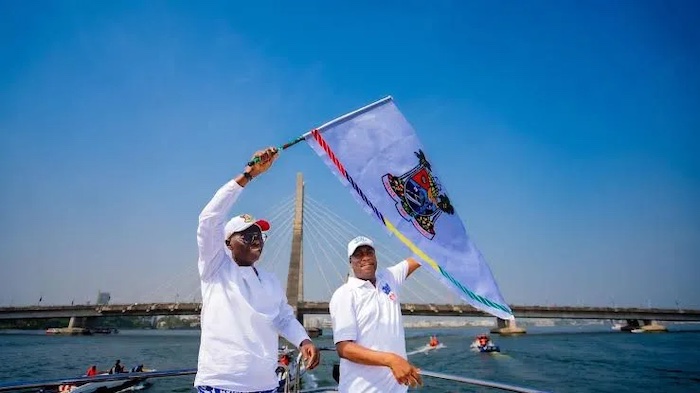
Governor Babajide Sanwo-Olu led state officials at the vibrant opening ceremony, describing the championship as a major milestone for both Lagos and Nigeria.
“The E1 Lagos GP, the first to be held in Africa, is not just about sport. It’s a platform to showcase Lagos’ readiness for global events and sustainability,” he said.
President Bola Tinubu, who endorsed the championship, commended the innovation behind the E1 series. “This is more than a thrilling spectacle on water. It is a statement of intent combining world-class entertainment with clean energy technology for a greener future,” he said.
Tinubu added that the event aligns with his administration’s blue economy vision, promoting prosperity through marine tourism, renewable energy, and coastal infrastructure.
“By investing in these areas, we open new opportunities for our youth and strengthen Nigeria’s global standing,” he noted.
The race saw Team Brazil emerge victorious, securing their first win in Africa with driver Timmy Hansen delivering a flawless performance.
They beat Team Blue Rising, owned by cricket legend Virat Kohli, and Team Drogba Global Africa, co-owned by football icon **Didier Drogba and Gabrielle Lemaire.
Chief Executive Officer of E1, Rodi Basso, praised Lagos for its energy, vision, and alignment with E1’s values. “Lagos was chosen for its drive for change and sustainability.
Nigeria is the first African country and the fourth continent the championship has reached,” he said.
He revealed E1’s expansion plans to grow from nine to twelve teams and increase races to fifteen by 2030, with an estimated valuation of €500 million.
Tourism expert Ikechi Uko lauded Lagos’ effort, noting that hosting global events like the E1 Championship puts destinations on the international tourism map. He advised Lagos to develop a long-term strategy for hosting major sports and entertainment events.
“This kind of event attracts global visibility and builds a tourism brand,” Uko said. “With the right strategy, Lagos can join global cities like Monaco, Singapore, and Abu Dhabi in reaping lasting economic benefits.”
Lagos Commissioner for Information, Gbenga Omotosho, added that the event underscores the state’s commitment to innovation and clean energy.
“It’s not just a race — it’s about creativity, sustainability, and economic growth. Hotels are fully booked, and the local economy is booming,” he noted.
The E1 Powerboat Championship marked more than a sporting spectacle — it symbolised Lagos’ growing confidence as Africa’s emerging tourism and entertainment capital.
The successful hosting proved the city’s capability to deliver world-class events that combine sport, culture, and technology.
With strong infrastructure, dynamic leadership, and vibrant hospitality, Lagos demonstrated that it can compete on the global stage. The next step is sustaining this momentum through marine infrastructure investment, eco-friendly tourism, and creative industry support.
If well harnessed, the legacy of the E1 Powerboat Championship will not just be about the roaring engines — it will redefine Lagos as the heartbeat of African tourism, where innovation, culture, and opportunity sail side by side.










 Culture4 years ago


