Connect with us

Culture

Makinde backs film village launch as boost for Oyo tourism economy

Published

on

Oyo tourism economic strategy

Governor Makinde hails Kunle Afolayan’s film village as proof that Oyo’s tourism economic strategy is already delivering results

Oyo State Governor, Seyi Makinde, has reaffirmed his administration’s commitment to expanding the state’s economy through tourism, describing it as a central pillar in his development strategy.

Also read: Kunle Afolayan’s KAP film village set to ignite African creativity in Oyo

Speaking at the inauguration of the Kunle Afolayan Productions (KAP) Film Village and Resort on Saturday, located in Igbojaye, Itesiwaju Local Government Area, the governor declared the project a major achievement that aligns with the state’s vision for sustainable growth.

In a statement by his Special Adviser on Media, Sulaimon Olanrewaju, Makinde noted that the new facility represents tangible progress in implementing Oyo’s *tourism economic strategy*, which he first outlined during his first term in office.

“During my first term, we launched a road map for accelerated development (2019–2023) built on four pillars: education, health, security, and economic expansion through infrastructure and agribusiness,” the governor said.

“For this second term, the road map for sustainable development (2023–2027) includes tourism and solid minerals development. This film village is living proof that we are making good on that commitment.”

He congratulated renowned filmmaker Kunle Afolayan, hailing the project as a landmark investment that has placed Igbojaye on the global tourism map. He also praised Afolayan’s decision to bring the multi-million-naira facility to Oyo, despite not being a native of the state.

“For us in Oyo, we welcome everyone who can add value. Regardless of where you are from, we encourage investment that supports our vision,” he added.

In support of the film village, Makinde directed the Itesiwaju Local Government Council to begin work immediately on the Okaka-Igbojaye road. He pledged to approve funding for the project, assuring the public that the government would ensure the village thrives.

“We will do everything within our means to support this resort. I’ve asked the Commissioner for Energy to install a solar mini-grid here, and we are also planning a dedicated electricity line from Okaka, just 23 kilometres away. By Christmas, reliable power must be in place,” he stated.

The governor further emphasised that tourism plays a critical role in Oyo’s economic diversification and that the state’s strategic location near Lagos and ongoing infrastructure upgrades make it an ideal investment destination.

He revealed that the Samuel Ladoke Akintola Airport in Ibadan would soon receive a wide-bodied aircraft, signalling its transformation into a regional international airport.

“Our goal is to create regional air connectivity. With short flights from Ibadan to Otu and onward to Igbojaye, plus new roads, we can easily bring tourists here. We are now expanding our plans to include tourism infrastructure even in our security initiatives,” Makinde explained.

Top government officials, including the Commissioners for Culture and Tourism, Information, Youth and Sports, as well as senior advisers and investment agency directors, were in attendance at the event.

Governor Makinde concluded by inviting local and foreign investors to take advantage of Oyo State’s business-friendly climate, stating, “We are open for investment from all who can add value.”

Continue Reading
Click to comment

Leave a Reply

Culture

Ofala festival: Obi of Onitsha marks 25 Years on throne

Published

on

 Ofala Festival 2026 celebrated Onitsha’s royal heritage as Obi Nnaemeka Achebe marked 25 years on the throne and addressed Nigeria’s economic challenges.

(more…)

Continue Reading

Culture

Crowds Gather for Rare Sunrise at Egypt’s Abu Simbel Temple

Published

on

Abu Simbel

Hundreds of tourists gathered at Egypt’s Abu Simbel temple to witness the twice-yearly sunrise ceremony illuminating Pharaoh Ramses II’s statue

Hundreds of tourists gathered at Egypt’s Abu Simbel temple on Thursday to witness a spectacular sunrise phenomenon in which sunlight illuminated the face of the statue of Pharaoh Ramses II, an event that occurs only twice a year.

Also read: 16 Famous Cultural Festivals That Define India

The ancient astronomical ceremony drew visitors from different parts of the world to the archaeological site in southern Egypt on October 22, one of two dates associated with the phenomenon.

The second occurrence takes place on February 22, when the rising sun illuminates the temple’s interior.

Egyptian tour guide Yasser Fouad described the occasion as extraordinary, saying some visitors had stayed overnight to secure the opportunity to witness the event.

“Today is an extraordinary day, everyone is keen, there are people who stayed over the night, foreigners who actually spent the night in Abu Simbel to see this phenomenon,” Fouad said.

The Great Temple of Ramses II at Abu Simbel dates back to the 13th century BC and is among Egypt’s most prominent archaeological attractions.

Built during the reign of Ramses II, one of ancient Egypt’s most powerful pharaohs, the temple is renowned for its monumental statues and sophisticated architectural design.

The twice-yearly sunrise phenomenon is a major attraction, drawing visitors eager to witness the interaction between sunlight and the temple’s ancient structure.

The dates have traditionally been associated with significant moments in Ramses II’s life.

October 22 is commonly linked to his birthday, while February 22 is associated with his accession to the throne.

However, the precise historical reasons behind the dates remain debated.

Some archaeologists have proposed alternative explanations, including that they may have marked the pharaoh’s coronation and birthday.

Abu Simbel underwent a major international rescue operation in the 1960s, when archaeologists and engineers relocated the temples to protect them from flooding caused by the construction of the Aswan High Dam.

The monumental structures were cut into large blocks and reassembled at a higher location, preserving the site for future generations.

The relocation was one of the most significant archaeological preservation projects of the 20th century.

Despite the move, the temple continues to attract visitors for its ancient Egyptian art, monumental architecture and remarkable alignment with the rising sun.

Also read: 16 Famous Cultural Festivals That Define India

The annual gatherings highlight the enduring appeal of Egypt’s archaeological heritage and the continuing fascination with the astronomical knowledge and engineering achievements of its ancient civilisation.

Continue Reading

Culture

16 Famous Cultural Festivals That Define India

Published

on

India

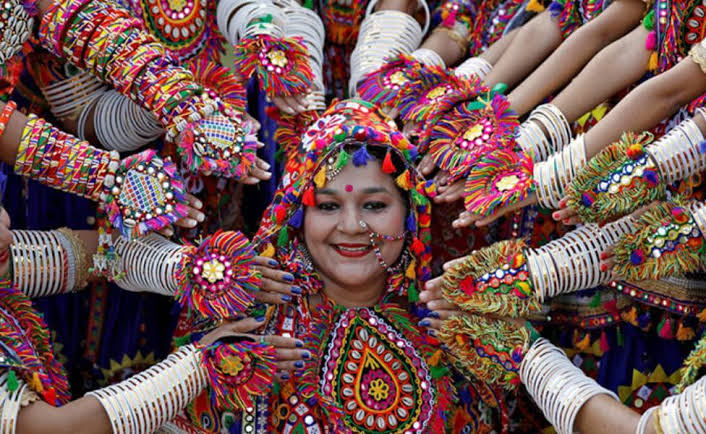
Discover 16 famous cultural festivals in India, from Diwali and Holi to Rath Yatra and the Pushkar Camel Fair, celebrating the country’s rich heritage (more…)

Continue Reading

Trending