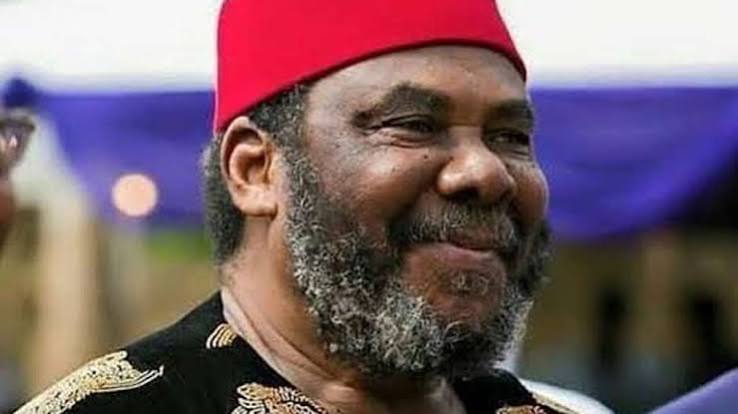
Soludo mourns Pete Edochie, honouring the 79-year-old actor’s remarkable contribution to Nigerian cinema, Igbo culture and broadcasting
Anambra State Governor, Professor Chukwuma Charles Soludo, has mourned the reported death of veteran Nollywood actor and broadcaster, Chief Peter Uwadiegwu Ogugua Edochie, popularly known as Pete Edochie, at the age of 79 in Enugu, describing him as a cultural giant whose work brought the richness of Igbo heritage to audiences across Nigeria, Africa and the world.
The governor’s tribute was contained in a statement issued on 25 November by his Chief Press Secretary, Christian Aburime, following the reported passing of the celebrated actor.
Soludo described Edochie as more than an accomplished entertainer, saying he represented an important institution in Nigeria’s cultural and creative landscape.
According to the governor, the actor’s contribution extended beyond the screen, particularly through his portrayal of traditional values, cultural identity and the wisdom of older generations.
“Through his craft, he taught generations the value of dignity, courage, family and the wisdom of our elders. His passing leaves a void in our creative landscape and in the heart of our State,” Soludo said.
The governor also pledged that the Anambra State Government would ensure that the late actor received an honour befitting his contribution to the state and the country.
“But his legacy will endure in the stories he told and the lives he touched. The Anambra State Government will ensure the late icon is honoured in a manner worthy of his stature and contribution to the State and the nation,” he added.
Soludo extended his condolences to Edochie’s wife, Mrs Josephine Edochie, their children, the extended Edochie family, the people of Ifite Nteje and members of the Nigerian film industry.
He also sympathised with admirers of the actor across the country and beyond, praying for strength for the bereaved family and eternal rest for the departed entertainer.
Born on 7 March 1947, Edochie hailed from Akamnato, Ifite Nteje, in Oyi Local Government Area of Anambra State.
Before becoming one of Nigeria’s most recognisable screen personalities, he built a career in broadcasting, joining the Eastern Nigerian Broadcasting Corporation in 1967.
His professional journey in the broadcasting industry saw him rise through the ranks to occupy senior management positions, including Director of Programmes and Deputy Managing Director.
However, it was his memorable portrayal of Okonkwo in the 1980s television adaptation of Chinua Achebe’s celebrated novel, Things Fall Apart, that established his place in Nigeria’s entertainment history.
His performance brought the character’s complex personality, traditional convictions and struggles to life, earning him widespread recognition and introducing his talent to audiences far beyond Nigeria.
Over the decades, Edochie became particularly associated with authoritative performances, commanding dialogue delivery and portrayals of traditional leaders, fathers and influential community figures.
His screen presence also helped strengthen the representation of Igbo language, customs and cultural values in Nigerian popular entertainment.
Beyond his acting achievements, Edochie’s career represented an important connection between Nigeria’s broadcasting heritage and the evolution of Nollywood into a globally recognised film industry.
His influence extended across generations of actors and viewers, many of whom regarded his performances as an enduring reference point for storytelling rooted in African traditions.
Soludo’s tribute therefore reflects the significance of Edochie’s contribution not only to Anambra State but also to Nigeria’s wider cultural identity.
For the people of Ifite Nteje and the wider Igbo community, the reported loss is particularly poignant, given the actor’s longstanding association with the preservation and promotion of indigenous culture.
As tributes continue to emerge, Edochie’s legacy remains closely connected to the characters he portrayed, the cultural values he championed and the generations of audiences who encountered Nigerian history and traditions through his work.








 Culture4 years ago


